Nurellari Winery, established in 1995, is a family-run vineyard in the Berat region of Albania that blends old-world techniques with modern winemaking. Operating from a former communist-era warehouse, the winery has grown into a hub for winemaking and agrotourism, offering award-winning wines, native grape varieties like Pulës and Serina, and a boutique guesthouse. Key highlights include:
- Signature Wines: Rezerva Superiore (red blend with a 25–30-year aging potential), Premium Serina 2019, and Pulsi (crafted from the Pulës grape).
- Agrotourism Destination: Rated 9.5/10 on Booking.com, with guided vineyard tours, wine tastings, and a guesthouse featuring furniture made from recycled oak barrels.
- Berat Location: Nestled between Mount Tomorr and the Osum River, the winery benefits from calcareous soils and a mild climate ideal for grape cultivation.
Whether you're exploring Albania's wine history or seeking a serene getaway, Nurellari Winery offers an unparalleled experience.
The History of Nurellari Winery

How the Winery Started
Back in 1995, the Nurellari family embarked on an ambitious journey by transforming a communist-era food warehouse in Fushë-Peshtan, located southeast of Berat. Mr. Fatsi and his son Levent saw potential in this old brick building, turning it from an industrial relic into a symbol of Albanian winemaking tradition and quality.
While preserving the original brick structure, the family introduced modern winemaking tools, such as steel fermentation tanks, combining tradition with innovation. Their mission wasn’t just about producing wine - it was about creating a legacy that celebrated Albania’s rich viticulture using contemporary methods.
The mid-1990s were a turbulent time for Albania's wine industry. After the fall of the regime in the early 1990s, many vineyards were abandoned or destroyed as private landowners sought to erase bitter memories of the past. With most grape-growers shifting their focus to raki production, the Nurellari family's dedication to crafting quality wine stood out. This era marked a turning point in Albanian winemaking, distinguishing producers committed to excellence from those focused on mass production.
Awards and Recognition
The Nurellari family's forward-thinking approach gradually earned them recognition in the world of Albanian wine. Their efforts reached new heights after a significant expansion in 2014, which introduced state-of-the-art fermentation facilities and a wine cellar. This investment allowed them to refine their techniques and create wines capable of competing on both local and international stages.
One of their standout creations is Rezerva Superiore, a blend of Merlot and Cabernet Sauvignon aged for at least 16 months in new barrels, with an impressive aging potential of 25–30 years. Another highlight is their Premium Serina 2019, which has garnered praise from wine experts for its refined character and exceptional structure. These advancements have not only boosted the winery's reputation but also contributed to the growth of Albania's wine industry, which saw production rise from 17,500 tonnes in 2009 to 23,470 tonnes by 2019.
sbb-itb-dfcc1b7
Grape Varieties and Winemaking Methods
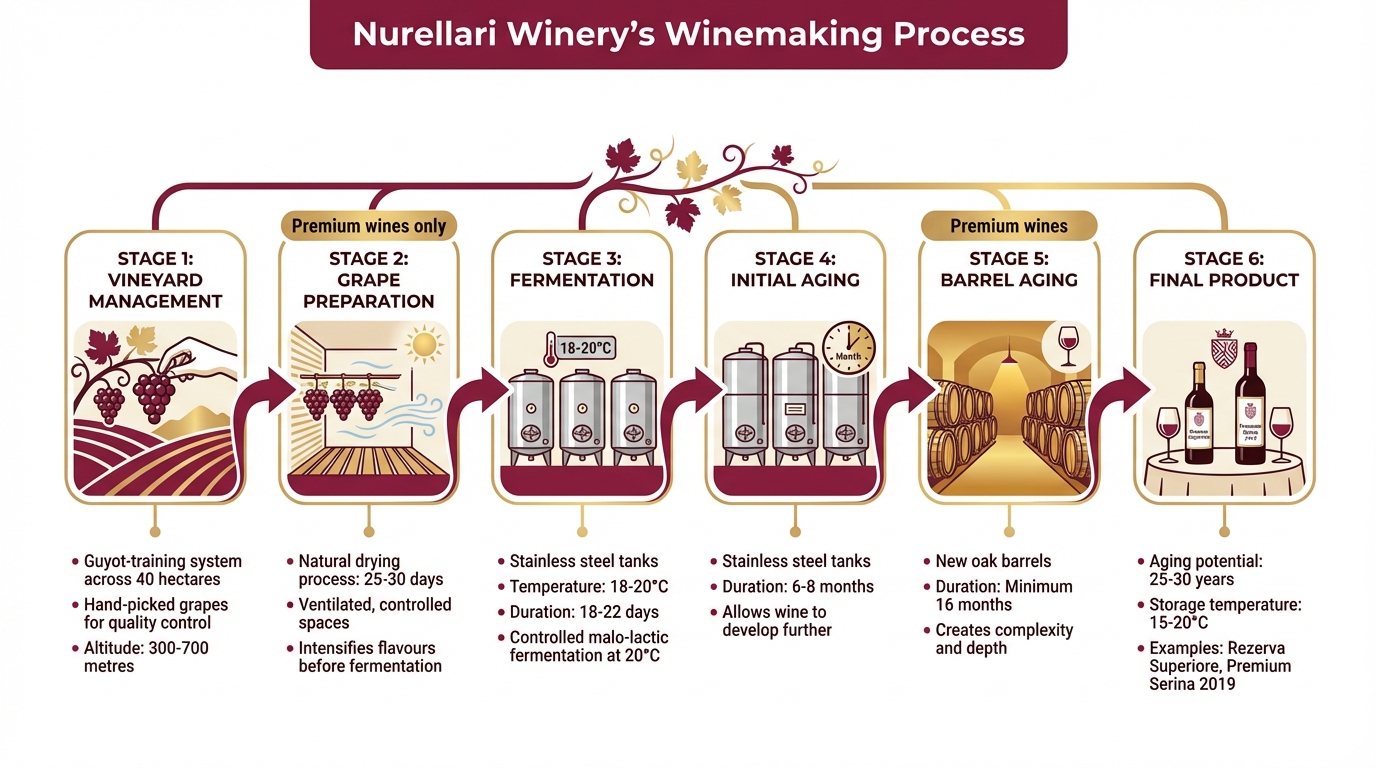
Nurellari Winery winemaking process from grape to bottle
Albanian Grape Varieties
Nurellari Winery embraces the rich heritage of Albanian grape cultivation, particularly in the Berat region, where traditions have been passed down through generations. One of their standout varieties is Pulës - locally known as Pulsi - a white grape celebrated for its bright acidity and adaptability. Nurellari crafts this grape into a crisp, dry wine aged in stainless steel, as well as the Verë e Shenjtë 2016, a dessert wine made entirely from Pulës. This barrel-aged wine, reaching 15% alcohol, offers enticing aromas of kumquat, star fruit, and yellow passion fruit.
Another key variety in their portfolio is Serina, especially the red variant, Serina e Zezë, which is often likened to Syrah for its character and complexity. Their Premium Serina 2019 exemplifies this grape's potential, delivering depth and structure. For those who enjoy lighter wines, Nurellari also produces Serina as a fresh and fruity rosé.
These native varieties are true rarities, with fewer than 200 hectares planted across Albania. In contrast, more common varieties like Shesh i Zi and Shesh i Bardhë account for nearly half of the country’s grape plantings. Historically, Pulës and Serina were grown in a unique way - trained up oak tree trunks to avoid morning fog and to let birds handle insect control naturally - highlighting the region's deep-rooted viticultural practices.
These distinctive grapes form the foundation of Nurellari's meticulous winemaking process.
Farming and Production Techniques
Nurellari combines traditional methods with modern techniques to honour the unique character of their grapes. The winery uses the Guyot-training system across its 40 hectares of vineyards, with plans to expand by an additional 20 hectares. Every grape is hand-picked to ensure only the finest quality fruit makes it into production. For premium wines like Rezerva Superiore, selected grapes undergo a natural drying process for 25 to 30 days in ventilated, controlled spaces, intensifying their flavours before production begins.
Fermentation takes place in stainless steel tanks at carefully monitored temperatures of 18–20°C over 18–22 days. This is followed by controlled malo-lactic fermentation at 20°C. For their premium labels, the wines are then aged in new oak barrels for at least 16 months. Before this, the wines spend 6–8 months in stainless steel tanks, allowing them to develop further. The result is wines that balance tradition and innovation, capable of aging gracefully for 25–30 years when stored at stable temperatures of 15–20°C.
This thoughtful combination of heritage practices and modern precision ensures that Nurellari’s wines capture the essence of Albania’s winemaking legacy.
Nurellari's Main Wines
Montemeca Red Blend
Nurellari's Montemeca red blend is a testament to the winery's expertise in combining tradition with modern winemaking techniques. This bold, full-bodied wine brings together Montepulciano, a renowned international grape, and Serina e Zezë, a native Albanian variety. The result is a wine that not only meets global standards but also highlights the distinctiveness of Albania's terroir. By blending these grapes, Nurellari strikes a balance between heritage and innovation, using precise fermentation and aging methods to enhance the wine's complexity. This dedication to excellence has helped elevate the profile of Albanian wines on the international stage.
While Montemeca showcases a harmonious blend of global and local influences, Nurellari's Pulsi white wine focuses entirely on celebrating Albania's indigenous grape varieties.
Pulsi White Wine
The Pulsi white wine, made from the native Pulës grape, offers a one-of-a-kind experience that captures the essence of Albanian viticulture. The dry version of Pulsi is fermented in stainless steel tanks, ensuring its crisp acidity and preserving its fresh notes of citrus, white fruits, and delicate florals.
"The Pulës – or Pulsi here, where it is noted for its vibrant acidity – is equally versatile, vinified dry and matured in stainless steel, or lusciously sweet and aged in barrel."
– Darrel Joseph, Wine Expert
Additionally, Nurellari produces Verë e Shenjtë 2016, a 15% dessert wine crafted entirely from Pulës grapes and aged in barrels. This sweet wine boasts aromas of kumquat, star fruit, yellow passion fruit, mandarin, and pear. Wine critic Darrel Joseph described it as having "cool yet forward sophistication", with a perfect balance of sweetness and alcohol. Whether enjoyed as a dry, crisp white or a rich, sweet dessert wine, Pulsi highlights the versatility of the Pulës grape. Visitors often praise it as an exceptional introduction to a rare variety that can only be found in Albania.
Nurellari and the Berat Wine Region
Nurellari Winery sits gracefully on a plateau southeast of Berat, nestled between the Osum River and the fields of Mount Tomorr. The vineyards, perched at altitudes ranging from 300 to 700 metres, enjoy a harmonious blend of natural elements. Warm sea breezes, misty mornings, and cool nights work together to enhance the grapes' aroma and flavour. The calcareous soil in the region not only drains well but also retains just enough moisture to sustain the vines, supporting both native grape varieties and a selection of international ones. This unique environment shapes not only Nurellari's wines but also the broader identity of the Berat wine region.
"Berat is located in the heart of south Albania, an ideal location for growing grapes: the soils are calcareous and climate is mild. Here the sun and right amount of rain alternate perfectly."
– Muharrem Çobo, Owner and Winemaker, Çobo Winery
Thanks to this perfect mix of soil, climate, and elevation, Berat produces robust reds and aromatic whites that reflect centuries of winemaking tradition. Nurellari currently manages around 40 hectares of vineyards, with plans to expand by another 20 hectares.
Berat's Growing Conditions
The calcareous soil of Berat plays a key role in ensuring steady grape ripening and maintaining balanced acidity. Warm days help develop sugars and flavour compounds, while cool nights preserve the grapes' acidity. The region's rolling hills and mountainous terrain create a variety of microclimates, giving each vineyard its own distinct character.
Berat is particularly celebrated for the Pulsi grape, a native variety that yields dry, well-balanced white wines with a light golden hue and an elegant structure. Winemaking here dates back to the 8th century, and today, wineries like Nurellari are blending this deep-rooted tradition with modern techniques. These ideal growing conditions are the foundation of a vibrant local wine culture that thrives on shared knowledge and collaboration.
Connections with Other Berat Wineries
As a key player in Berat's agrotourism scene, Nurellari collaborates with other local wineries to position the region as a leading wine destination. It operates within a network of renowned producers, including Çobo Winery, Kantina Alpeta, and Kantina Pupa. Together, these wineries champion indigenous Albanian grape varieties, which are central to the area's identity. Their close proximity - Çobo Vineyard, for instance, is just 1.7 km away - makes it easy for visitors to experience multiple wineries in a single day.
A full-day tour (Trip code WT-CODE 5153) invites guests to explore this rich winemaking area, with stops at Nurellari, Alpeta, and Çobo wineries. Spanning 10–11 hours, the itinerary highlights the diverse winemaking approaches of the Osum River valley and Roshnik village. Nurellari also offers high-quality accommodations, encouraging longer stays in the Berat area and supporting the local hospitality industry.
Visiting Nurellari Winery
A visit to Nurellari Winery is more than just a stop for wine enthusiasts - it's an invitation to dive into Albania's rich winemaking traditions, paired with warm hospitality and scenic beauty.
Tours and Wine Tastings
Family-led tours take you behind the scenes of the winemaking process, offering a closer look at fermentation, bottling, and the cellar facilities. Tastings are held in a room with breathtaking views of the vineyards, where guests can savor three to four wines. These often include the Pulës white, an indigenous variety, and the acclaimed Montemeca red blend. The experience also features Arrabon, a traditional Albanian grape brandy (raki) infused with walnuts and aged in French oak barrels. Pairings include fresh olives, a selection of cheeses, and traditional cottage cheese.
"It was great to tour the winemaking facilities with the winemaker. They make good wines." – Marc, Guest from Canada
Booking in advance is recommended, particularly during busy seasons. A taxi ride from Berat to the winery typically costs between 1,500–2,000 Lekë and takes about 20 minutes. Many visitors find the afternoons to be the most relaxed time for tastings. The winery’s exceptional ratings - 9.5/10 on Booking.com (from 86 reviews) and 4.9/5 on Airial Travel (848 reviews) - speak for themselves.
After your tasting session, take some time to explore the surrounding vineyards for a more immersive experience.
Walking Through the Vineyards
Step beyond the tasting room and enjoy a guided walk through the picturesque vineyards. The tours showcase the winery's sprawling terrain, framed by the stunning backdrop of Mount Tomorr and the Osum River valley. The vines, planted at altitudes ranging from 300 to 700 metres, thrive in calcareous soils and benefit from the region’s diverse microclimates, which play a vital role in shaping the character of each harvest. Guests can observe a mix of native Albanian grape varieties alongside international ones, all flourishing in this unique environment.
Staying at the Winery Guesthouse
Opened in May 2019, the boutique guesthouse at Nurellari Winery features six individually designed rooms, each furnished with pieces made from recycled oak barrels. The rooms combine modern comfort with rustic charm, offering amenities like air conditioning, free WiFi, and en-suite bathrooms. Guests can enjoy views of the gardens, mountains, or nearby landmarks from their rooms. Breakfast options include buffet, continental, Italian, and vegetarian choices.
"The rooms are absolutely stunning with furniture made from recycled oak barrels." – Eimear, Guest from Ireland
Room prices range from 1,700–2,500 Lekë per night, depending on the season and room type. Check-in is available between 14:00 and 18:00, while check-out is from 09:00 to 11:00. The property provides free private parking and includes a bar, coffee shop, and restaurant with room service. Staying overnight offers a chance to soak in the vineyard's tranquil atmosphere and enjoy a traditional breakfast before exploring nearby attractions like Berat Castle, Tomorri Mountain, and Osum Canyon.
The Future of Nurellari Winery
Nurellari Winery continues to embrace Albania's rich winemaking traditions while incorporating modern techniques to elevate its craft. By blending age-old practices like hand-picking grapes and natural drying methods with advancements such as temperature-controlled fermentation (maintained at 18–20°C) and facility upgrades, the winery ensures that its wines retain the unique character of native varieties like Pulës and Debina. This thoughtful balance between heritage and innovation ensures the wines meet international quality standards, laying the foundation for Nurellari's ambitious vision.
At the heart of this vision is the revival of Albania's indigenous grape varieties. For example, the Serina grape is being reintroduced as both a fresh rosé and a robust red wine. The process includes a meticulous four-week grape drying period followed by a year of aging in barrique. This dedication aligns with Albania's new wine legislation, which enforces strict PDO (Protected Designation of Origin) and PGI (Protected Geographical Indication) standards as part of the country's EU integration efforts.
"The winery employs a harmonious blend of traditional methods and modern technology in its wine production." – Sojourn Planet
Nurellari isn't just focused on its wines; it's also transforming how people experience them. Plans are underway to enhance visitor facilities and expand agritourism offerings, making the winery a destination in itself. Additionally, Nurellari is redefining traditional Albanian spirits with a modern twist. One standout is Arrabon, a walnut-flavored grape brandy aged in French oak barrels. Its sleek packaging and refined presentation show how Albanian beverages can compete in the global luxury market.
Premium offerings like the Reserva Superiore highlight Nurellari's confidence in producing wines that can stand alongside the world's best. As Albania's wine industry shifts its focus from bulk production to bottled wines - now accounting for 65% of the country's 2.6 million liters of annual output - Nurellari is poised to lead the next wave of Albanian winemaking excellence.
Conclusion
Nurellari Winery has become a symbol of Albanian winemaking, transforming a former communist-era warehouse into a modern facility since its founding in 1995. This family-run winery strikes a balance between tradition and innovation, crafting wines that celebrate Albania's heritage while meeting global standards. Their dedication to indigenous grape varieties like Pulës and Serina has been instrumental in reviving the nation’s wine culture.
But Nurellari offers more than just wine - it’s an experience. From their exceptional vintages, like the Rezerva Superiore, which boasts an aging potential of 25–30 years, to their warm Albanian hospitality, visitors are treated to something truly special. Their boutique guesthouse, which opened in May 2019, features six thoughtfully designed rooms, making it the perfect retreat for wine lovers. The combination of engaging tours, stunning vineyard views, and a welcoming atmosphere sets Nurellari apart.
"The wine was outstanding, the tour was informative and the wine tasting was a great experience." – Katie, United Kingdom
With a 9.5/10 rating on Booking.com from 86 verified reviews and a 4.8/5 on Evendo, Nurellari has earned high praise. Visitors frequently highlight the knowledgeable tours led by the winemakers and the unforgettable hospitality. Whether sipping their unique walnut-flavoured brandy or watching the sun set behind Mount Tomorr, every moment at Nurellari Winery feels like an authentic slice of Albanian wine culture.
For anyone venturing into Albania, Nurellari Winery is a must-visit destination that showcases the best of the country’s winemaking traditions. Be sure to book ahead and, if possible, stay overnight to fully immerse yourself in this unforgettable vineyard experience. Nurellari Winery continues to stand as a bridge between Albania’s rich past and its bright winemaking future.
FAQs
Why is Nurellari Winery a must-visit destination for agrotourism in Albania?
Nurellari Winery perfectly combines history, local traditions, and the art of modern winemaking. Tucked away between the serene Osum River and the majestic Mount Tomorr, this family-owned estate has transformed a former communist-era warehouse into a lively centre for crafting exceptional wines. Here, visitors can sample four distinct wines alongside traditional Albanian brandies infused with grape and walnut flavours - a true reflection of the region’s heritage and creativity.
But there’s more to the experience than just wine. Guided tours of the cellar offer a fascinating glimpse into the winemaking process, while personal stories shared by the family add a heartfelt touch, connecting guests to the area's rich traditions. For those seeking a more immersive escape, the estate features six cosy guest rooms. Guests can enjoy meals thoughtfully paired with the estate’s wines, making for an unforgettable stay.
Located just 15 km from Berat, Nurellari Winery serves as the perfect gateway to explore Albania's captivating history and stunning landscapes.
How does Nurellari Winery combine tradition and innovation in winemaking?
Nurellari Winery masterfully combines time-honored Albanian winemaking traditions with cutting-edge technology to create wines of outstanding quality. Their process begins with hand-picking grapes, ensuring that only the best fruit is selected. This careful approach helps preserve the distinct characteristics of indigenous grape varieties like Debina and Lavardar. In the cellar, advanced stainless-steel tanks and precise temperature management - ranging from 17–19 °C for reds and 7–10 °C for whites - are used to guarantee ideal fermentation and consistent flavors.
The winery operates out of a repurposed brick building from the communist era, blending modern functionality with historical significance. This thoughtful integration of heritage and innovation enables Nurellari to craft wines that honor Albania’s deep-rooted winemaking traditions while adhering to top-tier quality standards.
What makes the Pulës and Serina grape varieties unique?
Pulës is a grape variety native to the Berat region, celebrated for its light golden color, aromatic profile, and smooth, balanced flavor. This grape plays an important role in southern Albania’s winemaking traditions, showcasing the area’s deep-rooted connection to viticulture.
On the other hand, the Serina grape remains somewhat of a mystery. With little detailed information available, its unique traits are not well-documented. Even so, it holds its place within Albania’s rich and varied winemaking heritage.