An eco-friendly beachfront hotel minimizes its impact on the environment while supporting local communities. These hotels focus on renewable energy, water conservation, waste reduction, and protecting coastal ecosystems. They also prioritize hiring locally, using sustainable materials, and offering transparent sustainability practices. Key elements include:
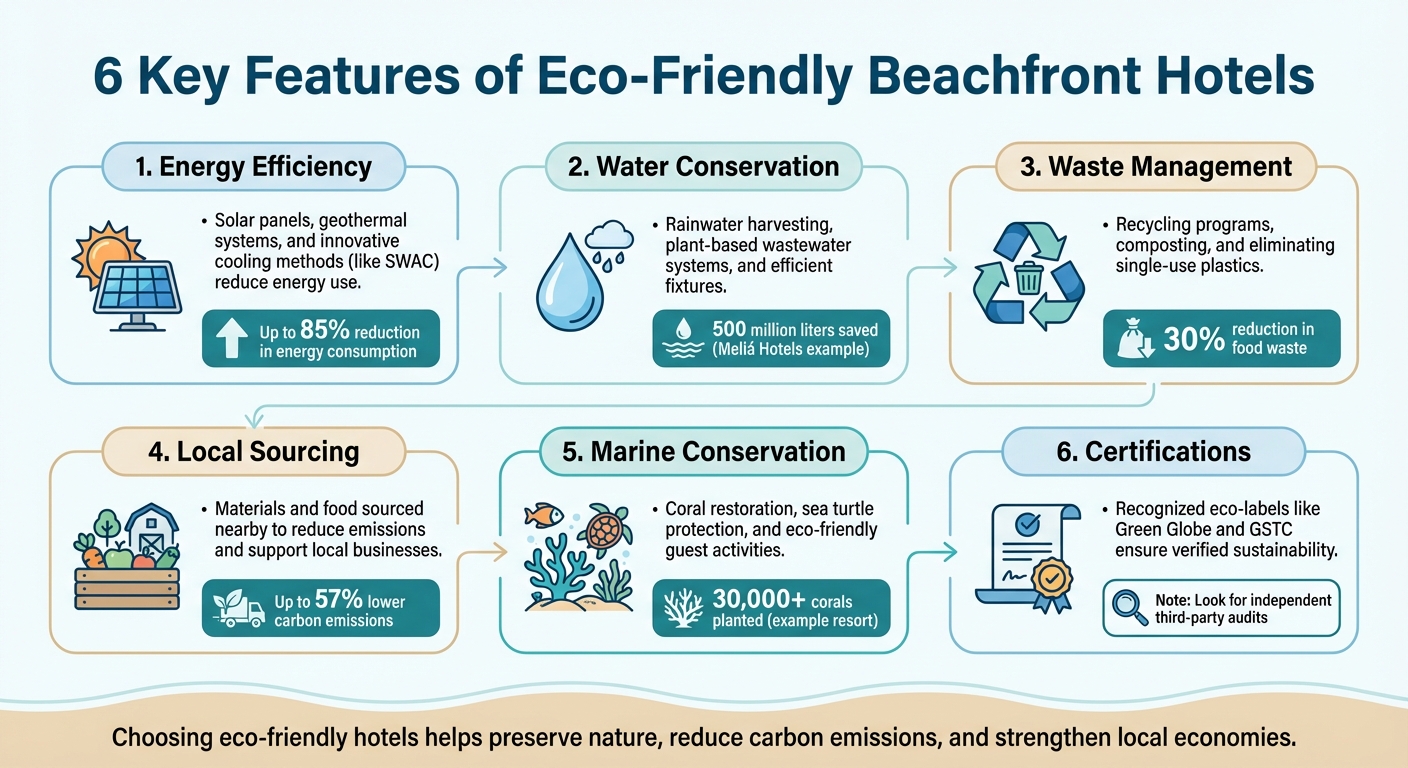
- Energy Efficiency: Solar panels, geothermal systems, and innovative cooling methods (like SWAC) reduce energy use.
- Water Conservation: Rainwater harvesting, plant-based wastewater systems, and efficient fixtures.
- Waste Management: Recycling programs, composting, and eliminating single-use plastics.
- Local Sourcing: Materials and food sourced nearby to reduce emissions and support local businesses.
- Marine Conservation: Coral restoration, sea turtle protection, and eco-friendly guest activities.
- Certifications: Recognized eco-labels like Green Globe and GSTC ensure verified sustainability.
Choosing these accommodations helps preserve nature, reduce carbon emissions, and strengthen local economies. By staying in such hotels, you directly contribute to protecting Albania's stunning coastlines and marine life.
6 Key Features of Eco-Friendly Beachfront Hotels
The WORLD'S Best 10 Eco Hotels & resorts Under $200!
Energy and Water Conservation Practices
Eco-friendly beachfront hotels are redefining luxury by using advanced energy and water-saving techniques. These methods not only enhance guest experiences but also safeguard fragile coastal ecosystems, proving that comfort and sustainability can go hand in hand.
Renewable Energy Sources
Solar panels are a hallmark of renewable energy at coastal hotels. Take Bardessono hotel in Yountville, California, for example. As of August 2025, it utilized 940 rooftop solar panels alongside an underground geothermal system to handle heating and cooling for its 62 guest rooms and spa - completely eliminating the need for external energy sources for these operations. Similarly, the Proximity Hotel achieves 39.2% less energy consumption than standard hotels by integrating solar panels with regenerative elevators that recapture electricity during use.
Some hotels go even further, generating more energy than they consume. The Svart Hotel in Norway, for instance, harvests excess solar energy to cover both operational and construction needs, estimating an 85% reduction in annual energy consumption through its innovative design. In remote areas, off-grid systems play a vital role. Mozambique’s Sussurro relies entirely on solar power, while The Brando in French Polynesia employs Deep Seawater Air-Conditioning (SWAC), which uses cold water from the ocean depths to significantly cut the carbon footprint of its cooling systems compared to traditional air conditioning.
Water Management Systems
Water conservation efforts often begin with simple upgrades like low-flow showerheads and faucets, but many hotels also adopt advanced recycling systems. For instance, inverter AC units cool rooms more efficiently than standard models, reducing both energy and water use.
Some properties achieve full water self-sufficiency. In April 2023, Jade Mountain Resort in Saint Lucia and Tranquilo Bay in Panama reached this milestone by combining rainwater harvesting, plant-based wastewater treatment, and watershed preservation. Song Saa in Cambodia recycles 100% of its wastewater for irrigation and landscaping, while Soneva Fushi in the Maldives integrates desalination with rainwater harvesting, creating a sustainable closed-loop water system. Meliá Hotels, through similar measures, cut their drinking water use by nearly 500 million litres over the past decade.
Awards highlight these efforts. In 2021, Calabash Grenada earned the title of "Water Efficiency Champions" in the tourism sector for its rainwater harvesting system, which directs collected water to the laundry and garden irrigation. Meanwhile, The Racha in Thailand has an innovative solution: it pumps rainwater runoff back into the island’s groundwater reserves. This not only prevents harmful runoff into the ocean but also protects nearby coral reefs.
These practices pave the way for further advancements in sourcing and waste management, showcasing how hotels can blend sustainability with luxury.
Local Sourcing and Building Materials
Beachfront hotels in Albania are finding ways to lessen their impact on the environment by choosing materials and resources from nearby areas. This method not only reduces transportation-related emissions but also bolsters local businesses and maintains the unique charm of the region. This philosophy of local sourcing applies to both the food served and the materials used in building these hotels.
Locally-Sourced Food and Ingredients
Many coastal hotels along the Vlore coast and the Albanian Riviera embrace "Zero Kilometre" policies, ensuring their ingredients come directly from nearby farms and fisheries. By avoiding long-distance transportation, they significantly reduce emissions. For perspective, typical fresh produce often travels around 2,400 km before reaching its destination, but local sourcing eliminates that journey entirely.
For instance, Valza Boutique Hotel in Vlore cultivates its own organic vegetables, herbs, and even produces olive oil on-site. Similarly, Aphrodite Garden Rooms & Apartment in Himarë, which boasts a 9.6/10 rating, features a terrace garden filled with fruit trees and homegrown vegetables that supply its restaurant. The Belvedere Hotel & Suites, also in Himarë, operates a small farm with animals and fruit trees to provide organic ingredients for its guests.
This approach not only cuts down on emissions but also minimizes waste. Research shows that farm-to-table restaurants can lower carbon emissions by up to 57% compared to global, meat-heavy chains. Additionally, sourcing ingredients within a 24-kilometre radius can reduce packaging waste and food spoilage by about 30%. Hotels like Jaroal Hotel in Saranda go a step further by partnering with local fisheries to offer sustainable fishing trips and serve fresh seafood, promoting responsible marine practices.
"We prefer local over organic – that way we know how the food is produced."
– Klaus Pichler, Hotelier, Hotel Weihrerhof
Responsible Building Materials
Environmental awareness doesn’t stop at food; it extends to the very structures of these hotels. Many Albanian coastal properties incorporate locally quarried stone and sustainably sourced wood into their construction. For example, EcoHotel Lefkara, located on the Albanian Riviera, was built using locally sourced stone and recycled materials. Some hotels even restore traditional buildings using historic construction techniques, preserving the area's heritage while reusing materials instead of extracting new ones.
Interior design also reflects this commitment. Valza Boutique Hotel uses bedding made entirely from natural materials, ensuring guest comfort aligns with eco-friendly standards. Additionally, hotels that collaborate with local artisans for furniture and décor not only reduce their supply chain’s carbon footprint but also provide a boost to the regional economy.
Waste Management and Recycling Programs
Albanian beachfront hotels generate around 1.5 kg of waste per guest each night. To tackle this, eco-conscious hotels are adopting thorough waste sorting, digital tracking systems, and on-site reuse methods.
Recycling Programs
Many coastal hotels have stepped up their recycling efforts by sorting waste into categories like glass, paper, plastic, cardboard, tin cans, and even more specialized items such as batteries, fluorescent tubes, and used cooking oil. This meticulous sorting approach ensures that as many materials as possible are recycled or repurposed. For instance, Hotel Weihrerhof in South Tyrol introduced a custom app called "My Monitoring" in 2020 to track waste data in real time. This initiative, led by Manager Klaus Pichler, resulted in reducing PET plastic use by 400 grams per guest.
"Knowing where you are is the first step to knowing where you are going."
– Klaus Pichler, Manager, Hotel Weihrerhof
Digital tools are also proving effective in cutting food waste, which accounts for nearly half of hospitality waste. For example, SANDnature hotel's "GreenGuide" has reduced food waste by 30%. Similarly, Red Carnation Hotels adopted Winnow technology across 11 of their properties, saving €85,000 and reducing food waste by 34.7 tons.
On-site upcycling is another creative solution. Blue Apple Beach crushes glass to use in construction, while Naturresort Gerbehof composts organic scraps to produce fertilizer. Hotels along Albania's Ionian coast could follow suit by setting up composting systems or collaborating with local farms to turn organic waste into agricultural resources.
These recycling initiatives lay a strong foundation for tackling another major challenge: single-use plastics.
Eliminating Single-Use Plastics
Beyond recycling, many hotels are taking bold steps to cut down on single-use plastics entirely.
Eco-friendly beachfront hotels are swapping disposable plastics for reusable or biodegradable alternatives. In guest rooms, bulk refillable toiletries have replaced countless small plastic bottles each year. At Calabash Grenada, a partnership with a local water company led to a glass bottle return-and-refill program, eliminating plastic water bottles from their operations entirely. Many properties now also offer filtered water stations alongside branded refillable bottles.
In kitchens and dining areas, plastic straws, utensils, and takeaway containers are being replaced with biodegradable or reusable options like glass and stainless steel. Housekeeping teams are also joining the effort, opting for concentrated cleaning products in refillable containers and choosing biodegradable bin liners instead of traditional plastic ones. These changes not only reduce packaging waste - which can account for up to 50% of a hotel’s total waste - but also lower costs by minimizing deliveries and buying in bulk.
sbb-itb-dfcc1b7
Protecting Marine and Coastal Areas
Hotels located along coastlines are uniquely positioned to play a key role in preserving fragile marine ecosystems. The ocean absorbs over 90% of the heat generated by greenhouse gases, yet marine species populations have plummeted by 50% in the last four decades. This makes the conservation efforts of beachfront properties both urgent and impactful, blending environmental science with guest involvement.
Coral Reef and Habitat Conservation
Efforts to restore coral reefs have become a hallmark of environmentally conscious resorts. Take Buddy Dive Resort in Bonaire, for instance. Since 2012, it has managed the Reef Renewal Foundation, planting 30,000 nursery-grown corals onto damaged reefs around the island. This work eventually contributed to the establishment of the Bonaire National Marine Park, highlighting how private initiatives can lead to broader ecological benefits.
In St. Barts, Eden Rock launched the "Eden Reef" project after Hurricane Irma devastated the area in 2017. Using BioRock technology, which promotes coral growth through low-voltage currents, the reef now supports around 200 coral fragments. Guests can even donate to the project and receive photo updates tracking their coral's growth.
Beyond coral restoration, hotels are also stepping up to protect marine wildlife. Jumeirah Thanda Island in Tanzania has partnered with the Marine Megafauna Foundation to safeguard over 200 whale sharks. In collaboration with Sea Sense, they also established four green turtle nests in 2023. Their marine biologist monitors a staggering 338 fish species and 34 coral genera. Many hotels are also adopting measures like retrofitting beachfront lighting to avoid disorienting sea turtle hatchlings, conducting daily patrols to monitor nests, and providing reef-safe sunscreen dispensers containing only non-nano zinc oxide or titanium dioxide.
Sustainable building practices further enhance these conservation efforts. For example, some eco-friendly properties replace permanent concrete piers with floating pontoons to protect the seafloor. Terranea Resort goes a step further by using bioswales and wetlands to filter rainwater runoff, preventing harmful pollutants from reaching the ocean.
Beach Cleanup and Community Programs
Hotels are also fostering community involvement through organized cleanup initiatives. Four Seasons Resort Maui at Wailea runs the "BlueʻĀina" program, combining reef cleanups with educational snorkel experiences for guests. This aligns with the insight of Peter Schuhmann, Professor of Economics at the University of North Carolina Wilmington:
"Tourists want to do their part, but we just have to give them the pathway".
Beachcomber Resorts & Hotels in Mauritius exemplify this approach. By 2024, all their properties achieved EarthCheck Gold Status, thanks to regular beach cleanups involving guests, staff (referred to as "Artisans"), and local stakeholders. Their coral restoration project also trains 20 Artisans from Paradis Beachcomber and Trou aux Biches Beachcomber to actively protect marine biodiversity. These initiatives strengthen ties between hotels and their communities, embedding them into the local culture rather than imposing external solutions.
Creative waste management is another area of innovation. On Tioman Island in Malaysia, a local NGO partnered with hotels to address glass waste by grinding discarded beer bottles into sand, which is then used in construction projects to combat sand shortages. This model could be adapted to Albania’s Adriatic and Ionian coasts, offering a way to repurpose waste while preserving the marine ecosystems that draw visitors year after year.
Certifications and Standards
Understanding which eco-certifications are credible and which are just marketing fluff is essential. This section breaks down the certifications that genuinely reflect sustainable practices.
Recognized Eco-Certifications
Credible certifications serve as proof that a hotel is committed to sustainability. The Global Sustainable Tourism Council (GSTC) plays a central role here by setting the standards for sustainability in tourism. However, GSTC doesn’t certify hotels directly. Instead:
"GSTC does not certify directly; GSTC certifies the certifiers."
When you see a "GSTC-Accredited" certification, it means the hotel’s claims have been verified by an independent organization through strict audits. For example, Green Globe certification requires hotels to meet 44 core criteria and over 380 compliance indicators, covering everything from energy efficiency to community involvement. To maintain their certification, hotels must pass annual audits.
Another notable certification is EarthCheck, which uses scientific benchmarks to measure a property’s environmental impact. Similarly, LEED focuses on sustainable building design, using a point-based system. Properties can achieve levels ranging from Certified (40-49 points) to Platinum (80+ points).
In Albania, international certifications like GSTC and Travelife are the go-to standards, as there’s no national eco-label yet. A good example is the Green Coast Resort and Residences at Palasa Beach, which adopted green building practices and installed an advanced wastewater treatment system in July 2021 to safeguard the marine ecosystem.
How to Spot Greenwashing
The line between authentic eco-certification and greenwashing often lies in the use of independent audits. Certifications like Green Globe and Travelife require third-party inspectors to verify claims on-site. On the other hand, self-reported programs like TripAdvisor GreenLeaders lack this independent verification, making them less reliable.
To identify genuine efforts, look for the certification body’s logo on the hotel’s website. Authentic eco-hotels often publish their sustainability policies and Environmental Management Plans as part of their certification process. You can also cross-check claims in official directories, such as the GSTC Certified Hotels Directory.
Be cautious of vague terms like "eco-conscious" without any concrete actions to back them up. True sustainability requires continuous improvement - certifications aren’t a one-time achievement but involve regular reassessments. For instance, if a beachfront property in Albania claims to be eco-friendly, look for specific initiatives: Do they detail their wastewater treatment system? Have they eliminated single-use plastics? These specifics are what set genuine efforts apart from empty marketing.
Guest Experiences at Eco-Friendly Hotels
Eco-friendly beachfront hotels in Albania offer more than just a place to stay - they provide a gateway to the country’s stunning natural landscapes and vibrant local traditions. These properties craft experiences that let you explore Albania’s coastal ecosystems while contributing to the communities that safeguard them. Here’s a glimpse into how these hotels blend nature, adventure, and cultural connection.
Nature-Based Activities
Staying at eco-conscious hotels along Albania's coast means you’re never far from the country’s breathtaking scenery. For example, EcoHotel Lefkara and Jaroal Hotel organize guided walks and sustainable boat trips to iconic spots like Haxhi Ali Cave and the serene coves of the Karaburun Peninsula. These activities are designed to immerse guests in the natural beauty of Albania’s coastline while promoting environmental awareness.
Wildlife lovers can head to Llogara National Park, where wild goats roam freely, or explore Vlora Bay, which supports initiatives to protect endangered bird species. For thrill-seekers, paragliding from the Llogara Pass offers breathtaking views, while resorts like Green Coast provide opportunities for diving and jet skiing. Many hotels also encourage guests to participate in beach clean-ups, turning conservation efforts into a meaningful hands-on experience.
For those drawn to Albania’s agricultural heritage, agritourism experiences are a must. Guests can try their hand at olive pressing or spend time with farm animals, offering a deeper connection to the land and its traditions. With around 300 sunny days each year, Albania’s mild climate ensures these outdoor activities can be enjoyed nearly all year long.
But the adventure doesn’t stop there. These eco-friendly stays also open the door to authentic local traditions.
Local Community Engagement
Eco-friendly hotels in Albania go beyond nature - they also create opportunities to engage with local communities. Guests can join traditional cooking classes, participate in craft workshops, or visit organic farms. These activities not only enrich your experience but also directly support local artisans and farmers.
"Ecotourism in Albania is all about getting off the beaten path and into the real landscape." – Alex Tiffany, Travel Expert
Hiring local guides for activities like hiking or kayaking offers more than just expert navigation - it’s a way to give back to the community. For instance, rafting on the Vjosa River, which was declared a National Park in 2023 to preserve its status as one of Europe’s last wild rivers, is best experienced with community-based operators. These groups not only enhance your adventure but also play a vital role in conserving the river’s pristine ecosystem.
Whether exploring Albania’s rugged coastlines or connecting with its rich traditions, eco-friendly hotels ensure your stay leaves a positive impact on both the environment and the people who call it home.
Conclusion
Opting for an eco-friendly beachfront hotel in Albania is a meaningful way to preserve the country’s stunning coastlines while supporting local communities. These accommodations go beyond standard practices by using renewable energy, managing water resources wisely to cut down carbon emissions, and implementing waste reduction strategies that help keep the beaches pristine. Many also take proactive steps like planting native vegetation and mangroves to combat coastal erosion.
Staying in these eco-conscious hotels doesn’t just help the environment - it also strengthens local economies. By keeping tourism revenue within Albanian communities, these initiatives contribute to fair wages, better working conditions, and a more authentic experience for visitors.
This philosophy is echoed by industry leaders:
"By choosing our hotels, people find out that they can travel to a very comfortable or even luxurious destination and have an amazing experience, while also being kind to the planet at the same time." – María Olazábal Corral, CEO and Founder, Eco Hotels & Resorts
The trend toward sustainable travel is undeniable. A 2022 global report revealed that 78% of travelers prefer staying in sustainable properties. Albania’s eco-friendly hotels are at the forefront of this movement, offering visitors the chance to enjoy unspoiled beaches, rich cultural heritage, and the satisfaction of knowing their stay supports both the environment and local communities.
Whether you’re exploring the rugged beauty of the Karaburun Peninsula, diving into the turquoise waters of Vlora Bay, or immersing yourself in Albanian traditions, choosing eco-friendly accommodations ensures your journey leaves a positive mark. For more tips and curated experiences on sustainable travel in Albania, visit Discover Albania at https://albaniatravel.guide.
FAQs
What certifications indicate a beachfront hotel is eco-friendly?
When planning a stay at an eco-friendly beachfront hotel, it’s worth checking for certifications that highlight sustainable practices. Two important ones to keep in mind are the Global Sustainable Tourism Council (GSTC) Hotel Standard and Travelife certification. These certifications assess hotels based on factors like energy efficiency, waste management, and contributions to local communities.
Opting for certified hotels not only minimizes environmental impact but also supports businesses committed to responsible tourism. This approach becomes even more meaningful when visiting Albania's breathtaking coastline, where protecting its natural charm ensures it remains unspoiled for future generations.
How do eco-friendly beachfront hotels help protect marine life?
Eco-friendly beachfront hotels are doing their part to safeguard marine life by adopting sustainable practices. Many are actively involved in restoring coral reefs and planting new corals, which helps to rejuvenate delicate underwater ecosystems. Additionally, these hotels often host beach clean-ups and partner with local conservation organisations to tackle litter and protect marine habitats.
To reduce their impact on the environment, these hotels turn to renewable energy, run waste-reduction programmes, and ensure wastewater is treated properly to prevent pollution. By opting for eco-conscious accommodations, visitors can enjoy a peaceful getaway while contributing to the preservation of Albania's breathtaking coastline and rich marine life.
How do eco-friendly beachfront hotels manage water sustainably?
Eco-friendly beachfront hotels are stepping up their game when it comes to water conservation and management. They’re embracing practices like recycling wastewater for irrigation, setting up rainwater harvesting systems, and installing water-efficient fixtures such as sensor-activated taps, aerators, and dual-flush toilets. To go even further, many of these hotels use advanced metering systems to keep a close eye on water usage and cut down on waste.
These efforts don’t just protect the environment - they also safeguard local water supplies. By adopting these methods, hotels are helping to preserve Albania’s breathtaking coastline and support its communities for generations to come.